A guide by David Ryan, 2026‑10‑01. It is general information, not financial advice.
Suppose you are paid in crypto and expect it to rise in value. Selling it to
pay the rent means foregoing the increase in value. A loan offers another way. You keep the
crypto as collateral, borrow a stablecoin against it, and spend the stablecoin.
You can do all of this onchain on Ethereum, with no exchange and no
middleman. This page shows the steps, then the arithmetic and the risks, which
matter more than the steps.
What you need
A hardware wallet, such as a Ledger or a Trezor, connected to a browser
wallet such as Rabby
or MetaMask. Write the seed phrase on paper. Never type it into a website.
Some ETH in that wallet to pay gas. On an L2 such as Base, a transaction
costs a few cents. On Ethereum mainnet it may cost more.
A way to turn USDC into your local money. Use the exchange or app you
already use, and send a small test amount first.
The steps
Get the collateral. Ask to be paid in ETH, WBTC, cbBTC, USDT/USDC, or any other crypto.
Ask them to pay that to your Ethereum wallet address on Ethereum, Base, or other suitable L2.
Swap to the right token.
If they paid in a different token to what you want, you can swap to the correct token
using a swapper such as
Matcha,
CoW Swap or Uniswap.
A salary paid as native Bitcoin cannot enter Ethereum directly. Convert it
first into a wrapped version such as cbBTC, or save into ETH.
Supply it to Aave. Open
app.aave.com,
connect the wallet, pick the asset and press Supply. Aave counts it as
collateral at once, and it earns a small yield.
Borrow USDC. Press Borrow on USDC and choose an amount.
Aave shows a health factor. The loan stays safe while it stays a long way above 1, and
a higher number gives you more room.
Spend it. Send the USDC to your off-ramp and convert it
to local money.
Next payday. Repay some of the loan, or supply the new
salary as more collateral, or both. Repeat each month.
The arithmetic to check first
The loan-to-value ratio (LTV) is the debt divided by the collateral. A high
LTV is how people get liquidated: if it climbs past the limit, Aave sells
part of your collateral to repay the loan, and charges a penalty.
Take the plan where 100% of salary goes in as collateral and the expenses come
out as debt. Each month the collateral grows by your salary and the debt grows
by your expenses. With flat prices, the LTV settles at
expenses ÷ salary. A person who spends 60% of their salary
sits at 60% LTV, which is close to the liquidation line for most assets. A
price fall of 15% to 25% could end the experiment.
Several steps bring the LTV down:
Hold savings in the collateral from the start. The loan then sits on top
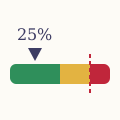
of a larger stack. A stack of four times the debt gives 25% LTV.
Repay part of the loan each payday, so the debt does not pile up.
Keep a stablecoin buffer for the first months, and borrow only once the
collateral is large.
Check the health factor on Aave every week. Aim to keep it above 3.
What it costs
Interest. The USDC borrow rate is variable and usually
several percent a year. That is higher than the yield on the collateral, so
you pay for the loan every month. You come out ahead only if the collateral
rises by more than the interest. Read the live rates on Aave before you
start.
Gas. Each supply, borrow and repay pays a network fee.
The off-ramp. Converting USDC to local money has a spread
or a fee. Compare two or three routes.
What can go wrong
A price fall. A big drop liquidates a loan that is too
large. Borrow less than you think you need.
Smart contract risk. Aave is widely used and audited, and
it can still have bugs.
Wrapper risk. A wrapped Bitcoin depends on its issuer.
Native ETH has no such dependency.
Stablecoin risk. USDC can lose its dollar price, though it
has held it for years apart from a short break in March 2023.
Tax. Many countries tax a crypto salary as income, and tax
each swap. A loan is often not a sale, and the rules differ by country. Ask
an accountant before you start.
Try it for a month
Run the whole loop with a small amount, such as $200, including the off-ramp
and the repayment. You learn where the fees fall and how the health factor
moves. Then decide whether to scale up.